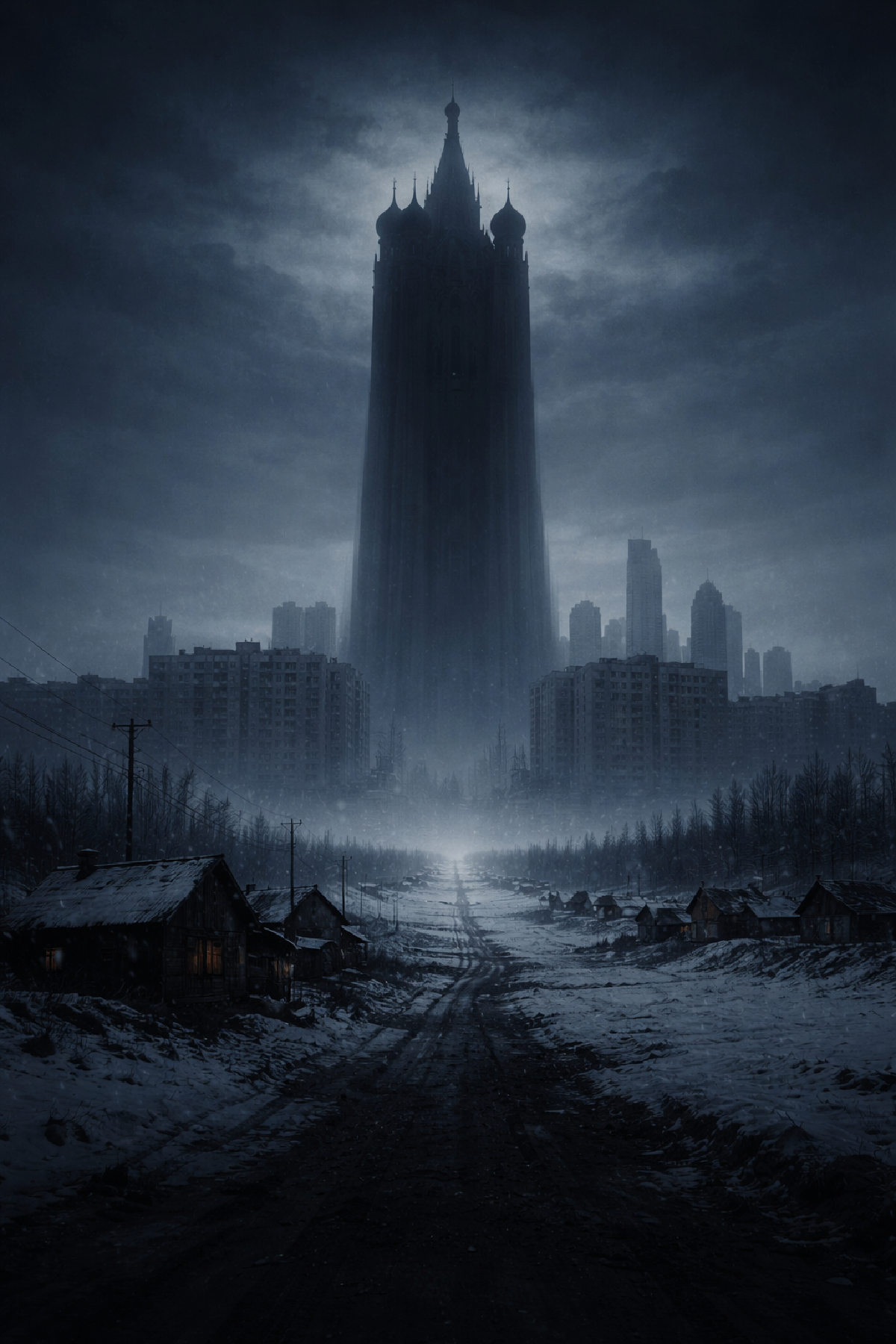
Author: Tihomir Majić & AI (ChatGPT, Gemini)
Introduction: Deciphering the “Russian Code” #
In a rapidly changing world, we often attempt to explain the actions of great powers exclusively through economic interests or military strategies. While such approaches are methodologically tidy, they frequently miss the deeper causes of political behaviour. History persistently reminds us that behind every tank and every diplomatic ultimatum stands a human being – shaped by fears, values, and a deeply embedded collective legacy.
In this sense, Russia may be the greatest enigma of the modern era. What do Russians mean when they speak of the “breadth of the soul,” and how does this sentiment translate into foreign policy doctrine? Why are stability and authority valued more highly in Moscow than the liberal freedoms the West considers universal? And how does the generational divide between the “guardians of tradition” and the “children of the internet” shape the future of the world’s largest country?
Ethnopsychological code of Russians #
Contemporary international relations analysis often errs by treating states as exclusively rational actors driven by GDP figures and military capabilities. To truly understand Russia, however, it is necessary to move beneath the surface of politics into the realm of ethno-psychology – the discipline that examines the “software” of a nation’s collective psyche that governs the “hardware” of the state.
In this sense, Russia is not merely a state. It is a psychological construct defined by a permanent tension between a messianic self-image and existential fear, between a sense of historical chosenness and a deeply internalised insecurity.
The Foundations of the Russian Soul: Space, Fate and Conciliarity (rus. Sobornost) #
The Russian ethno-psychological code is inseparable from geography. The vast openness of the steppe has shaped a psyche that strives for breadth yet suffers from chronic insecurity due to the absence of natural borders. Security is not perceived as a stable condition, but as a process of continuous expansion or control of the surrounding space.
From this emerges a distinctive Russian fatalism (avos) – a blend of passive acceptance of fate and extraordinary resilience in times of crisis. While Western political culture is grounded in individualism and legal contractualism, the Russian tradition rests on conciliarity (rus. sobornost): an ideal of organic communal unity in which the whole outweighs the individual.
Within this value system, the leader becomes the embodiment of the state, and the state the guarantor of justice (rus. spravedlivost), which in the Russian worldview frequently stands above formal law.
Geopolitics as a Psychological Mechanism #
On the international level, the concept of the “Russian World” (rus. Russkiy mir) represents a direct expression of an ethno-psychological need to protect a cultural and linguistic space perceived as part of one’s own being. For the Russian consciousness, state borders are mutable, but the borders of spirit and civilisation are considered inviolable.
Closely linked to this is the “besieged fortress” complex. Historical experiences of invasion and collapse have produced a psyche in which peace is viewed as a temporary pause, and compromise as a dangerous weakness. In this framework, foreign policy is not merely a struggle for resources, but a struggle for the status of a state-civilisation with a special historical mission.
Russia’s Aggression Against Ukraine: An Ethno-Psychological Culmination #
Russia’s aggression against Ukraine cannot be understood solely as a rational geopolitical calculation. It represents the culmination of deeply rooted ethno-psychological patterns. In the Russian collective consciousness, Ukraine is not perceived as a fully sovereign “Other,” but as a lost part of Russia’s own civilisational and historical body.
The loss of Ukraine is experienced not only as a strategic defeat, but as an existential amputation of identity. Within this psychological framework, aggression is rationalised as a defensive act, an attempt to “correct a historical injustice.” The sovereignty of another state loses its autonomous value, while violence becomes legitimised as a means of preserving a foundational national myth.
Internal Cleavages and System Stability #
Contemporary Russia is marked by a profound ethno-psychological dualism. On one side stands rural and traditional Russia, the bearer of archetypes of loyalty, patience, and the sacralisation of authority. On the other, in urban centres such as Moscow and St Petersburg, a new Russian psyche is emerging – individualistic, digitally literate, and critical.
System stability rests on the regime’s capacity to activate shared defensive reflexes in moments of crisis, suppressing internal differences through the construction of an external threat.
Security Implications: What the EU and NATO Must Understand #
Viewed through an ethno-psychological lens, it becomes clear that Russia does not respond to moral appeals, normative condemnations, or diplomatic ambiguity. In the Russian perception, such signals indicate weakness.
Russia respects only clearly demonstrated strength, consistency, and readiness for long-term confrontation.
From this follow several key strategic conclusions:
- deterrence must be permanent, visible, and non-negotiable
- military support for Ukraine must be long-term and oriented toward victory, not conflict freezing
- the EU must develop its own security culture and defence capabilities, rather than remain solely an economic project
- psychological deterrence – political cohesion and clarity of messaging – is as important as military power
Any strategy based on expectations of Russian “understanding” or rational retreat, has proven illusory.
Conclusion #
Ethno-psychology teaches us that Russian behaviour on the global stage, including aggression against Ukraine, is not an anomaly but a logical outcome of the internal structure of the Russian state-civilisation. Russia does not seek to become a “predictable partner” within Western frameworks, because within its collective psyche this would signify a loss of authenticity and historical purpose.
The war in Ukraine has exposed a fundamental error in the Western approach: the belief that economic costs and sanctions alone would alter Russian behaviour. In the Russian worldview, suffering often confirms the righteousness of the chosen path rather than its failure.
The key question for the future of European security is not how to change Russia, but how to establish clear limits to its actions. Only a combination of military strength, political cohesion, and deep understanding of Russia’s ethno-psychological code can prevent future aggression.
Russia will respect the West only when it stops testing it.
And it will stop testing it only, when the price becomes unequivocally too high.