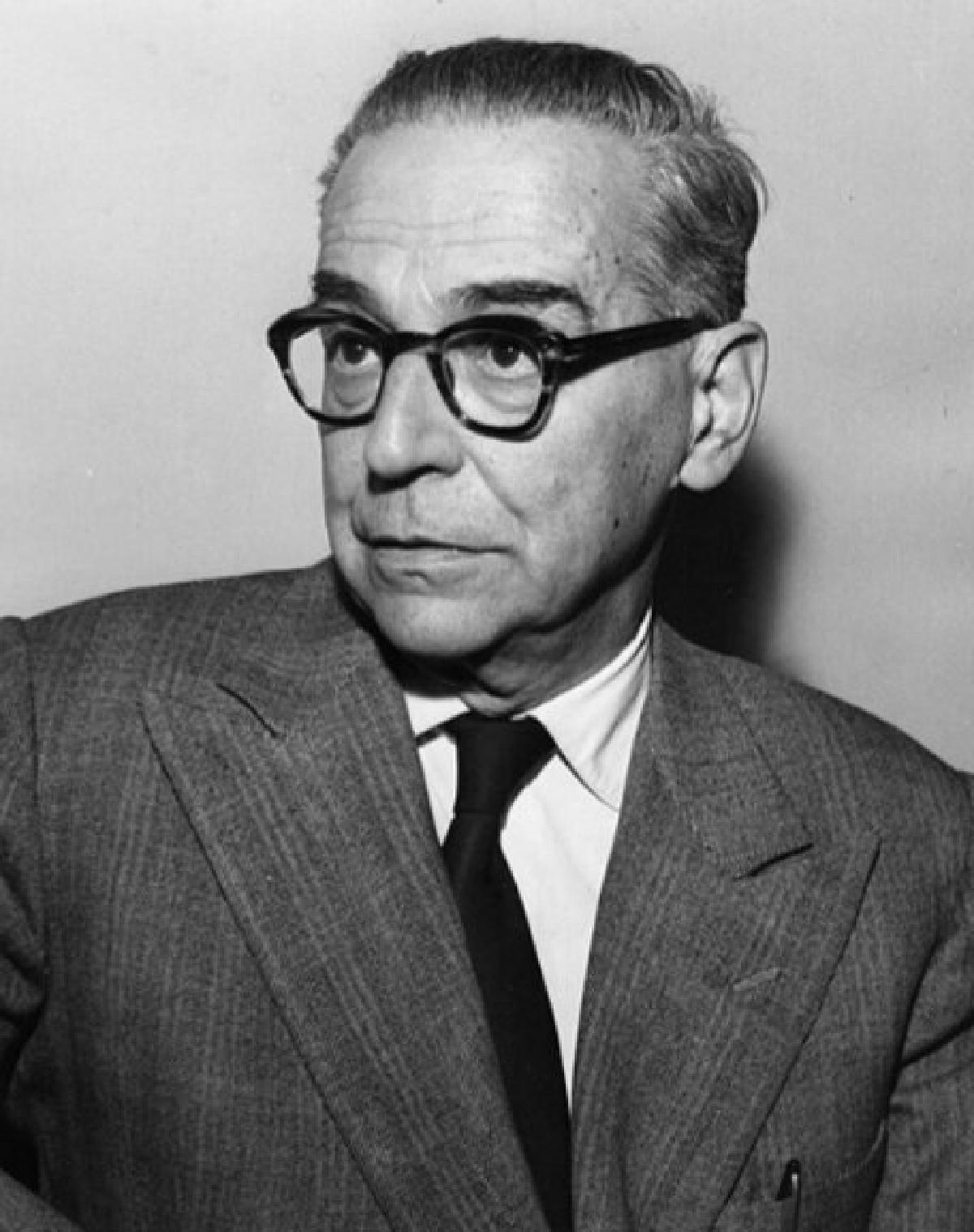
Author: Tihomir Majić
On the eve of his departure to Stockholm to receive the Nobel Prize in 1961, Ivo Andrić gave a series of interviews to Yugoslav journalists. One of those conversations, recorded by his biographer Miroslav Karaulac, ended abruptly.
A journalist had asked Andrić:
“How does the greatest Croat feel right now?”
Andrić calmly replied:
“Madam, I am first and foremost a man of Belgrade. Our conversation is over.”
At first glance, this seems like an uncomfortable journalistic provocation. But in the political context of Yugoslavia at the time, the question was not posed by the journalist alone. It was posed by the system. It was posed by a state that, through its security apparatus — led by Aleksandar Ranković — had spent decades surveilling intellectuals, writers, and artists. In other words, it was a question from Ranković’s Yugoslavia.
A Writer with a Dangerous Biography #
At the moment he received the Nobel Prize, Andrić was a symbol of the state’s international prestige. Yet his biography carried significant political weight. Before 1945, he had been a senior diplomat of the Kingdom of Yugoslavia, ambassador to Berlin, and a witness to the dramatic events that preceded the Second World War.
For the communist regime, such a past was not without danger. In the ideological logic of the new state, he was a man of the old elite: a monarchist diplomat, a bourgeois intellectual, and a representative of a political world that had vanished in the war. His entry into the socialist cultural order was accepted — but never entirely forgotten. In a state that monitored its own intellectuals, this meant only one thing: constant, discreet surveillance.
A State of Files #
Yugoslavia’s security apparatus — first OZNA, then UDBA — maintained extensive dossiers on public figures. In this context, particular weight is given to the public testimony of playwright and Serbian Academy of Sciences and Arts (SANU) academician Dušan Kovačević, who was told by a police officer that after Andrić’s death in 1975, as many as twenty kilograms of various documents related to the writer had been burned.
If that claim is accurate — and there is no reason to doubt it — it raises the question: what did the state want to hide? Police assessments? Intercepted letters? Notes on private conversations? In a system like Yugoslavia’s, such dossiers were not the exception — they were the rule.
Ideological Surveillance of Culture #
Andrić was not isolated only by the state’s watchful eye. His standing in cultural life was also monitored by ideological guardians within the literary world. Among them were respected writers.
Isidora Sekulić, one of the most influential Serbian intellectuals of her time, doubted Andrić’s loyalty to Serbian identity and cultural heritage. Her skepticism was not political in the narrow sense, but it reflected a question that always smoldered in Yugoslav society: to whom does Andrić actually belong?
On the other side stood the poet and revolutionary Oskar Davičo. As one of the most prominent communists among writers, Davičo was a symbol of ideological vigilance in the cultural life of socialist Yugoslavia. His position within literary institutions meant that Andrić’s loyalty to the Party and the socialist project was also carefully watched.
Between national suspicion and ideological surveillance, Andrić lived in a space of controlled reputation.
The Novel That Sensed the Collapse #
In this light, his last great project takes on special significance — the novel Omer-Pasha Latas. The novel was left unfinished, but its thematic core was clear: authoritarian power attempting by force to hold together a crumbling empire.
The figure of Omer-Pasha, a historical Ottoman military commander, is in Andrić’s interpretation not merely a historical character. He is a symbol of political power attempting to discipline a society already disintegrating from within. In conversations with the writer Ljubo Jandrić, Andrić admitted that he could not finish the novel. The subject, he said, was too close to reality.
In those words, many later saw a premonition of what would unfold two decades later — the bloody dissolution of Yugoslavia. The novel about the collapse of the Ottoman Empire thus became an allegory for the fate of the Yugoslav state.
The Drama at the Military Medical Academy (VMA) #
After a stroke in late 1974, Andrić was sent for treatment at the Military Medical Academy (VMA) in Belgrade. Writer Mirko Kovač, in his memories of that time published in Feral Tribune several decades later, recorded part of the human drama of Andrić’s departure.
Although the source of this information was the “Belgrade čaršija” (the old-town social circuit), its content should not be underestimated — Andrić’s every signal was monitored, even in that state of consciousness. In a country that had spent decades recording every word of its intellectuals, such moments were also tracked. That is why the information about the burned files of Ivo Andrić acquires additional, and not merely symbolic, value.
The Dissident of Silence #
Andrić was never a classical political dissident. But his strategy was different — and more sophisticated. He was a dissident of silence.
He donated his Nobel Prize money to the development of librarianship in Bosnia and Herzegovina — a gesture that was simultaneously cultural and political: a commitment to knowledge, but also an affirmation of loyalty to Bosnia. At the same time, he almost entirely avoided political statements, especially on the national question. The episode with the journalist shows just how aware he was of the political weight of a single sentence.
A Life as Premonition #
Andrić’s life and his work are difficult to separate. The writer who described the collapse of empires lived in a state that would itself collapse twenty years after his death. The writer who understood the deep historical conflicts of the Balkans lived long enough to sense that they would reopen.
And so the episode with the journalist is not merely an anecdote from the time of the Nobel Prize. It is a moment in which writer, state, and history converge. And the question about Croatian identity put to him was not just a journalistic question. It was a question from a state attempting to control its own past — and its own future.
Andrić answered that question the way he answered throughout his life: briefly, coldly, and irrevocably.
And then — with silence.